Trump Lifts Some Canada Tariffs in Boost for Maine Senator Susan Collins
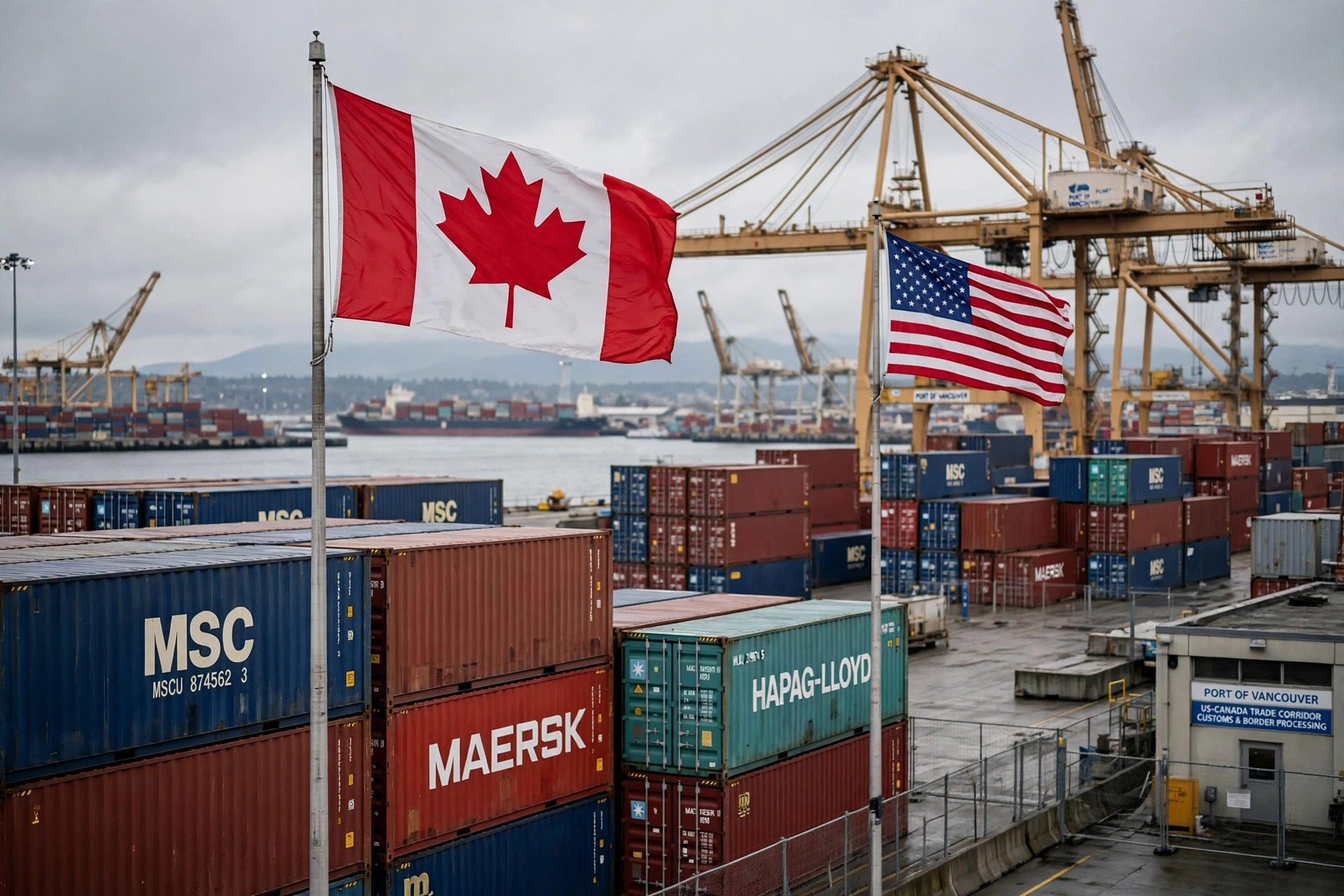
Trump Lifts Some Canada Tariffs in Boost for Maine's Susan Collins Ahead of Midterms
SEO Title: Trump Removes Some Canada Tariffs, Boosting Maine Senator Susan Collins 10 Days Before Midterms
Introduction
President Donald Trump has removed some US tariffs on Canadian goods, delivering a timely political victory for Republican Senator Susan Collins of Maine just ten days before the midterm elections. The exemptions, covering agricultural products and processing materials vital to Maine's economy, arrive at a critical moment in one of the cycle's most closely watched Senate races.
The tariff relief covers nine agricultural products — including blueberries, potatoes, apples, and seaweed — along with processing materials and equipment such as plywood sheets, packing boxes, paper products, and some machinery. For Maine, a state whose economy is deeply intertwined with cross-border trade with Canada, the exemptions touch industries ranging from logging to lobstering.
Collins, who has served in the Senate for nearly 30 years, faces Democratic challenger Troy Jackson — a state senator and former logger — in a toss-up race that could determine control of the Senate. The November 3 election is widely viewed as one of the pivotal contests of the midterm cycle.
The White House characterized the move as a "refinement" of tariff actions imposed on July 20 and September 8, describing it as an effort to offset what it called Canada's "discriminatory trade measures." But the timing — ten days before an election in which Maine's senior senator is fighting for her political life — has ensured the decision will be read through a political lens.
Background: Maine's Dependence on Canadian Trade
A Cross-Border Economy
Maine's economic relationship with Canada is among the closest of any American state. The two share a long land border, and the flow of goods, workers, and investment across that border shapes daily economic life in communities throughout the state. From the forests of northern Maine to the fishing ports along the coast, Canadian trade touches nearly every major industry.
The state's agricultural sector is particularly exposed. Maine is one of the nation's leading producers of wild blueberries, a crop with deep roots in the state's coastal counties. Potato farming remains a mainstay of Aroostook County in the north. Apple orchards dot the landscape of central and southern Maine. Seaweed harvesting, a smaller but growing industry, draws on the state's extensive coastline.

Each of these products — blueberries, potatoes, apples, seaweed — is among the nine agricultural goods now exempted from the tariffs. For the farmers, harvesters, and processors who depend on cross-border markets, the exemptions offer direct and immediate relief.
From Logging to Lobstering
Maine's economy extends well beyond agriculture. The state's forest products industry — encompassing logging, lumber, pulp, and paper — has historically been one of its largest employers, particularly in rural northern and western counties. The lobster industry, iconic the world over, supports thousands of jobs along the coast, from harvesters to dealers to processors.

Both industries were expected to be hit hard by the trade war with Canada. Logging operations depend on cross-border equipment and markets. Lobster dealers rely on Canadian processing capacity and Canadian buyers. Tariffs threatened to raise costs, disrupt supply chains, and squeeze the already thin margins on which many of these businesses operate.
The exemptions for processing materials and equipment — plywood sheets, packing boxes, paper products, and some machinery — are aimed squarely at these industries. By removing tariffs on the inputs that Maine businesses need, the administration hopes to cushion the blow of the broader trade conflict.
The Human Stakes
Behind the trade statistics are communities. In mill towns and fishing villages across Maine, the tariff fight is not an abstraction — it is a question of whether local employers can keep their doors open and whether families can make ends meet. The exemptions, while limited in scope, represent a tangible acknowledgment of those stakes.

The Senate Race: Collins vs. Jackson
Susan Collins: Nearly Three Decades in the Senate
Senator Susan Collins is one of the most recognizable figures in American politics. First elected in 1996, she has served in the Senate for nearly 30 years, building a reputation as a moderate willing to break with her party on high-profile votes. That independence has been both her greatest political asset and, in an era of intense partisanship, a source of vulnerability.
Collins has cultivated an image as a senator who puts Maine first, and her advocacy for the state's economic interests — including its trade relationship with Canada — has been a consistent theme of her tenure. The tariff exemptions play directly into that narrative, allowing her to claim a concrete win for Maine industries delivered through her influence.
Troy Jackson: The Challenger
Collins's opponent, Democrat Troy Jackson, brings a very different biography to the race. A state senator and former logger, Jackson roots his candidacy in working-class Maine — the mill workers, loggers, and tradespeople whose livelihoods depend on the industries now caught in the trade war.
Jackson's background gives him natural credibility on the economic issues at the heart of the campaign. As a former logger, he can speak firsthand about the pressures facing Maine's forest products industry. His challenge to Collins rests on the argument that after nearly 30 years in Washington, it is time for new representation.
A Toss-Up With National Implications
The Maine Senate race is rated a toss-up, and its outcome could determine which party controls the Senate. In a closely divided chamber, every seat matters, and both parties have poured resources into the contest.
For Republicans, holding Collins's seat is essential to any path to a Senate majority. For Democrats, defeating a nearly 30-year incumbent in a state that has trended in their direction would be a signature victory.
The tariff exemptions add a new variable to an already volatile race. Whether voters credit Collins for the relief — or view it as an election-eve maneuver — could influence the outcome in a contest where margins are expected to be thin.
The Tariff Decision in Detail
What Was Exempted
The exemptions announced by the administration fall into two broad categories:
Agricultural products (9 items): The exemptions cover nine agricultural goods, including blueberries, potatoes, apples, and seaweed. These are products central to Maine's farm and harvest economy, and their exemption directly benefits the state's growers and harvesters.
Processing materials and equipment: The second category includes plywood sheets, packing boxes, paper products, and some machinery. These are the inputs and tools that Maine's industries — from logging to food processing — need to operate. By exempting these goods, the administration aims to reduce cost pressures on Maine businesses even as broader tariffs remain in place.
The White House Framing
The White House described the exemptions as a "refinement" of tariff actions taken on July 20 and September 8. According to the administration, the adjustments are designed to offset Canada's "discriminatory trade measures" — a reference to Canadian policies that Washington views as unfairly disadvantaging American goods.
This framing presents the exemptions not as a retreat but as a calibration: a fine-tuning of tariff policy to target the measures' intended effects while minimizing collateral damage to American industries and workers.
A Signal of More to Come?
Trump also signaled that some of the exempted goods could face tariffs on other products — a reminder that the relief may be partial and conditional. The comment suggests that the administration views the exemptions as tactical adjustments within an ongoing trade confrontation, rather than a step toward de-escalation.
For Maine businesses, this caveat introduces uncertainty. Relief on one set of goods could be offset by new tariffs on others, leaving the net effect unclear. The administration's willingness to keep tariff options open means that the trade war's trajectory remains unpredictable.
The Politics of Tariff Relief
Election-Eve Economics
The timing of the announcement — ten days before the midterms — is impossible to ignore. Sitting presidents have long used the tools of economic policy to aid favored candidates, and tariff exemptions targeted at a battleground state's key industries fit squarely within that tradition.
Collins's campaign will undoubtedly highlight the exemptions as evidence of her effectiveness. The ability to point to a specific, tangible benefit delivered to Maine workers in the campaign's final days is a powerful closing argument.
Jackson's campaign, for its part, may argue that the exemptions are an admission that the tariffs were harming Maine in the first place — and that the relief is too little, too late, or too politically motivated to deserve credit.
The Broader Trade War
The Maine exemptions must be understood within the larger context of the US-Canada trade conflict. The tariffs imposed on July 20 and September 8 were part of a broader confrontation that has strained one of the world's most important bilateral trade relationships.
Canada is the United States' largest trading partner, and the two economies are deeply integrated, particularly in sectors such as automotive manufacturing, energy, agriculture, and forest products. Tariffs disrupt supply chains that have been built over decades, raising costs for businesses and consumers on both sides of the border.
The administration has justified the tariffs as necessary responses to unfair Canadian practices. Critics have argued that the measures hurt American workers and businesses as much as — or more than — they pressure Canada.
Maine as a Microcosm
In many ways, Maine's experience illustrates the broader dynamics of the trade war. The state's industries are simultaneously vulnerable to tariffs and dependent on the cross-border relationships that tariffs disrupt. The exemptions offer relief but not resolution — a reminder that in trade conflicts, even the winners incur costs.
What Happens Next
The most immediate next step is the November 3 election. Maine voters will render their verdict on Collins and Jackson, and the tariff exemptions will be one factor among many — alongside health care, the economy, and the broader national mood — shaping their decision.
Beyond the election, the trajectory of US-Canada trade policy remains uncertain. Trump's signal that exempted goods could face tariffs on other products suggests that the administration is keeping its options open. Whether the "refinement" represents a step toward a more targeted approach or merely a tactical pause will become clearer in the weeks and months ahead.
For Maine's industries, the practical question is whether the exemptions will translate into real relief. Farmers, loggers, lobstermen, and processors will be watching to see how the exemptions are implemented, how quickly they take effect, and whether they are sufficient to offset the pressures of the broader trade conflict.
The Senate's balance of power, potentially hinging on the Maine result, will shape the legislative landscape for the next two years — including the future of trade policy itself.
Frequently Asked Questions
What tariffs did Trump remove?
Trump removed US tariffs on nine Canadian agricultural products — including blueberries, potatoes, apples, and seaweed — as well as processing materials and equipment such as plywood sheets, packing boxes, paper products, and some machinery.
Why is this a win for Susan Collins?
Collins, Maine's Republican senator of nearly 30 years, is in a toss-up reelection race against Democrat Troy Jackson. Maine's economy depends heavily on Canadian trade, and the exemptions benefit key state industries — giving Collins a tangible achievement to highlight ten days before the November 3 election.
Who is Troy Jackson?
Jackson is a Democratic state senator and former logger challenging Collins. He is running on his working-class Maine roots and arguing that after nearly 30 years, the state needs new representation in Washington.
How did the White House describe the move?
The White House called it a "refinement" of tariff actions from July 20 and September 8, aimed at offsetting what it described as Canada's "discriminatory trade measures."
Could the exempted goods face tariffs again?
Trump signaled that some exempted goods could face tariffs on other products, suggesting the relief may be partial and that the administration is keeping its tariff options open.
Why does Maine rely so heavily on Canadian trade?
Maine shares a long border with Canada, and cross-border trade is central to industries from logging and forest products to agriculture and lobstering. Tariffs threaten to raise costs and disrupt supply chains throughout the state's economy.
Sources
- Today News Brief (via The Guardian)


Comments
Post a Comment