Mike Collins: Republican Nominee for U.S. Senate in Georgia (2026)
Mike Collins: Republican Nominee for U.S. Senate in Georgia (2026)
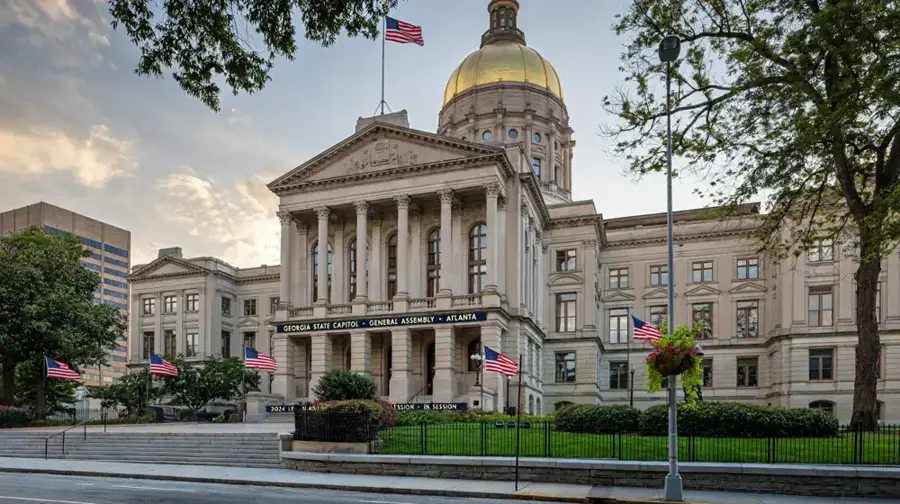
State: Georgia | Seat: U.S. Senate, Class II — held by Democrat Jon Ossoff (seeking a second term) | Party: Republican | General Election: November 3, 2026 | Opponent: Jon Ossoff (D)
At a Glance
| Detail | Fact |
|---|---|
| Full name | Michael Allen Collins Jr. |
| Born | July 2, 1967, Jackson, Georgia |
| Age | 59 |
| Party | Republican |
| Current office | U.S. Representative, Georgia's 10th Congressional District (2023–present) |
| Education | Piedmont Academy, Monticello (1985); B.A. in business administration, Georgia State University (1990) |
| Career before politics | Businessman — founded a trucking company with his wife in the early 1990s (grew to 100+ employees); credit-union board chairman; local chamber of commerce president |
| Family | Married to Leigh Ann Collins; three adult children; four grandchildren; lives in Jackson, Georgia; son of former U.S. Representative Mac Collins (1993–2005) |
| Political experience | U.S. House, Georgia's 10th District (2023–present); reelected 2024 |
| Defining feature | A second-generation congressman and trucking magnate — a combative Trump ally who authored the Laken Riley Act and won a bruising primary runoff to challenge the Democrats' most-watched incumbent |
Early Life and Education
Mike Collins was born Michael Allen Collins Jr. on July 2, 1967, in Jackson, Georgia, where he still lives. He is the son of Mac Collins, who served in the U.S. House from 1993 to 2005 — making Mike a second-generation congressman. He attended Piedmont Academy in nearby Monticello, graduating in 1985, and earned a bachelor's degree in business administration from Georgia State University in 1990.
Career Before Politics: Trucking
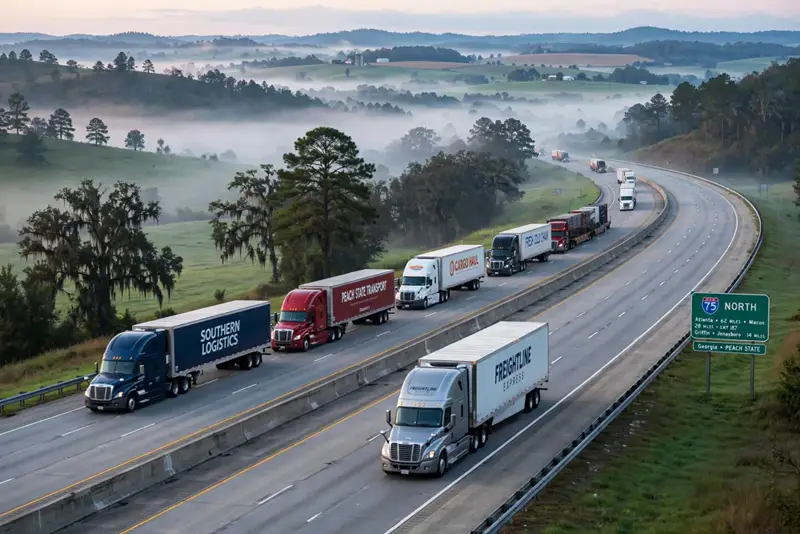
In the early 1990s, Collins and his wife, Leigh Ann, founded a trucking company. The business grew to employ more than 100 people. Before entering Congress, Collins also served as a credit-union board member and chairman and as president of his local chamber of commerce. His business background is the foundation of his political identity: the "conservative workhorse" who built a company and understands the economy from the loading dock.
Political Career: The House
2022: election. Collins was first elected to Congress in 2022, representing Georgia's 10th District — a conservative district running east from metro Atlanta to the South Carolina line, including Athens. He was reelected in 2024.
In the House, Collins quickly became known as a combative Trump ally with a taste for viral social-media combat. His signature legislative achievement is the Laken Riley Act, which he sponsored: named for the 22-year-old nursing student murdered in his district by a man who had entered the country illegally, the law allows federal immigration officials to detain immigrants charged with certain crimes and expanded detention requirements. It was the first bill signed by Trump in his second term (2025) — a credential Collins's campaign features prominently.
He voted for the 2025 tax-and-spending law signed by Trump and has made that vote a campaign issue; Ossoff has attacked the law's Medicaid reductions and the distribution of its tax benefits.
The 2026 Primary: Beating the Establishment
Collins won a grueling Republican primary to earn the right to face Ossoff. He took 40.5% in the initial round, then defeated former college football coach Derek Dooley in the June 2026 runoff with 55.5% of the vote. The dynamics were striking:
- Trump's last-minute endorsement — delivered two days before the runoff, after early voting had concluded — was widely credited with putting Collins over the top.
- Governor Brian Kemp backed Dooley and campaigned vigorously for him, arguing Dooley had the better November shot. Collins's win was thus a black eye for the Kemp wing and a demonstration of Trump's continued primary power.
Collins campaigned as a "conservative workhorse" committed to passing Trump's agenda while able to "work across the aisle without sacrificing his conservative ideals."
Controversies
Collins enters the general election carrying several:
- Divisive social-media history: opponents point to a record of provocative posts that critics call extreme; his campaign frames them as plain-spoken conservatism.
- Ex-chief of staff scandal: his former chief of staff, Brandon Phillips, was accused of misusing taxpayer money. Collins has sought to distance himself from Phillips.
- Son-in-law's extremist links: his son-in-law, David Allen Scheer II, has been linked to Nazi imagery and white-nationalist beliefs on social media. Ossoff has publicly attacked Collins over both the Phillips and Scheer matters.
- Ongoing ethics investigation: detractors cite an active ethics probe; details were not confirmed for this profile.
These issues are central to Ossoff's general-election strategy: painting Collins as too extreme and too scandal-tainted for a statewide Georgia electorate.
The 2026 Race
Collins faces Senator Jon Ossoff — the 39-year-old incumbent, the youngest senator, Georgia's first Jewish senator, and the Democrats' most-watched incumbent — in the November 3 general election. Early voting ran October 13–30.
Cook rates the race Likely Democratic, and polling and prediction markets heavily favor Ossoff. But Collins's team sees a path: Georgia voted for Trump in 2024, Ossoff is the only Democratic incumbent seeking reelection in a Trump-won state, and a nationalized race on immigration, the economy, and Democratic governance could make it competitive. His campaign is also counting on the Laken Riley Act — a genuinely popular law named for a murdered Georgia student — as a shield against "soft on immigration" attacks and a sword against Ossoff.
Polls, Fundraising, and Prediction Markets
- Polling: The RealClearPolitics average in October 2026 showed Collins at 43.4% against Ossoff's 52.0%.
- Prediction markets: Polymarket/Kalshi traders gave Collins roughly a 5% implied chance of winning as of late October 2026 (the mirror of Ossoff's ~95%), per the project tracking index.
- Fundraising: About $6.5 million raised through the June 30 quarterly report, with roughly $2.0 million cash on hand (per thegafiles.com). Despite his trucking-company wealth, he has self-funded only modestly (about $65,000); a substantial share of receipts — roughly $2.38 million — was transferred from his House campaign account, alongside joint fundraising committees and corporate/industry PACs including SpaceX, Delta Air Lines, Home Depot, and credit unions.
- Ratings: Cook Political Report: Likely D. Sabato's Crystal Ball: Likely D.
Key Campaign Issues
- Immigration and border: the centerpiece — author of the Laken Riley Act; supports Trump's mass-deportation campaign; argues illegal immigration strains housing and public services; calls for tougher action on fentanyl.
- Taxes and spending: supports tax cuts, deregulation, and the 2025 Trump tax-and-spending law; pledges to cut federal spending.
- Energy: expanded domestic energy production as a cost-reduction strategy.
- Second Amendment: strong gun-rights positions.
- Health care: criticizes the Affordable Care Act; favors market-based cost reduction; voted for the 2025 law's Medicaid spending cuts while supporting its $50 billion in rural health-care funding; has promoted legislation on veterans' opioid-record access and overprescribing risks.
- Anti-Ossoff: the meta-issue — framing the incumbent as a national Democrat out of step with Georgia.
Campaign Strategy
Collins is running as Trump's workhorse: the businessman who built a company, wrote the Laken Riley Act, and will deliver the president's agenda in the Senate. His team wants a base-mobilization race — maximum rural and exurban turnout, framed around immigration and the economy — and is betting that Ossoff's national profile and presidential-speculation chatter make him look like a politician using Georgia as a stepping stone.
The challenge is the math: down nine points in the polling average, in a state whose suburbs have been moving away from Trump-style Republicans, against an incumbent with a bipartisan legislative record and a formidable fundraising machine.
What to Watch in the Final Days
1. Whether the polls are wrong: Georgia polling has a mixed record; a closer-than-expected finish would still be a moral victory with 2028 implications.
2. Rural turnout: Collins needs historic margins outside metro Atlanta to offset the suburbs.
3. The scandal issues: whether the Phillips and Scheer stories break through to low-information voters.
4. The Laken Riley Act: whether Collins can keep immigration — his best issue — at the center of the closing argument.
5. Trump's involvement: a late presidential rally could energize the base — or remind suburban voters why they soured on MAGA.

Georgia in 2026: The State Context
Georgia remains the Democrats' most important southern battleground, and this race is its marquee event. A Collins upset would require a fundamental polling failure and would signal a Republican wave; an Ossoff win by the expected margin confirms Georgia's status as a blue-trending battleground and protects the Democrats' best-held seat. Either way, the Laken Riley Act's author versus the Senate's youngest member is a generational and stylistic contrast that will be studied long after the votes are counted.
Career Timeline
- 1967: Born July 2 in Jackson, Georgia, son of future U.S. Representative Mac Collins (1993–2005).
- 1985–1990: Graduates Piedmont Academy in Monticello (1985); earns a B.A. in business administration from Georgia State University (1990).
- Early 1990s: Founds a trucking company with his wife, Leigh Ann; the business grows to 100+ employees; serves as credit-union board chairman and local chamber of commerce president.
- 2022: Elected to the U.S. House (Georgia's 10th District); reelected in 2024.
- 2025: Authors the Laken Riley Act — expanding detention of immigrants charged with certain crimes — which becomes the first bill signed by Trump in his second term.
- June 2026: Wins the Republican Senate runoff with 55.5% against Derek Dooley (after 40.5% in the first round), powered by Trump's endorsement two days before the vote; Gov. Brian Kemp had backed Dooley.
- 2026: Raises ~$6.5 million through June 30 (~$2M cash on hand); faces scrutiny over his ex-chief of staff's alleged misuse of taxpayer funds, his son-in-law's extremist social-media links, and an ongoing ethics probe.
- November 3, 2026: General election against Sen. Jon Ossoff (D). Early voting in Georgia ran October 13–30.
The Primary That Made Him
Collins's June 2026 runoff victory deserves a closer look, because it explains both his strengths and his general-election problem. Taking 40.5% in the first round against a field that included former football coach Derek Dooley, Collins was the clear frontrunner — but Dooley had Governor Brian Kemp's endorsement and the argument that he was more electable in November. Trump's endorsement, delivered two days before the runoff after early voting had ended, settled it: Collins won 55.5%. The victory proved Trump's kingmaking power in Georgia primaries and humiliated the Kemp wing. But it also locked Collins into a general-election identity — Trump's workhorse — in a state where the voters who decide November are increasingly uncomfortable with exactly that brand. His campaign's bet is that the primary electorate and the general electorate want the same thing. The polls say otherwise.
Sources
- Wikipedia (Mike Collins — politician); fox5atlanta.com candidate profile; thegafiles.com candidate pages (fundraising, positions); thecurrentga.org on the runoff (June 2026); courierheraldtoday.com on the general-election matchup; project tracking index (RCP averages, Polymarket odds, Oct 2026).
Coalitions and Key Supporters
Collins's coalition is the MAGA base plus the Georgia Republican establishment that backed him through the bruising primary — now awkwardly reunited after the Kemp-Dooley split. Trump's last-minute runoff endorsement was the making of his nomination, and his campaign is built on the premise that Trump's voters are Georgia's decisive bloc. The Laken Riley Act gives him a substantive credential beyond loyalty: a law, signed by the president, named for a murdered Georgia student.
His vulnerability is everything outside that coalition: the suburban voters moving away from Trump-style Republicans, the moderates repelled by his social-media combativeness, and the scandal stories (the ex-chief of staff, the son-in-law's extremist links) that Ossoff is amplifying. Down nine points in the polling average, his campaign needs either a polling failure or a fundamental reshaping of the electorate in the final ten days — a tall order, but one his team insists Trump's turnout machine can deliver.
The Bottom Line
Mike Collins is running the race he was built for — immigration, Trump loyalty, businessman's bluntness — against an opponent built to beat exactly that campaign. Down nine points in the polling average with ten days to go, his path requires either a historic polling miss or a turnout surge that rewrites Georgia's electorate. Neither is impossible: Georgia has surprised before, Trump's base has been underestimated before, and the Laken Riley Act gives Collins a substantive achievement that transcends partisan caricature. But the fundamentals — an incumbent with a bipartisan record, a diversifying electorate, and a scandal-free campaign — argue the likeliest outcome is the one the markets predict. If Collins loses, his consolation is a House seat and a MAGA following. If he somehow wins, it will be the upset of the decade.
*Profile prepared October 24, 2026. Poll numbers and market odds change frequently; verify against current averages before publishing.*


Comments
Post a Comment