Jon Ossoff: Democratic Incumbent Senator from Georgia (2026)
Jon Ossoff: Democratic Incumbent Senator from Georgia (2026)
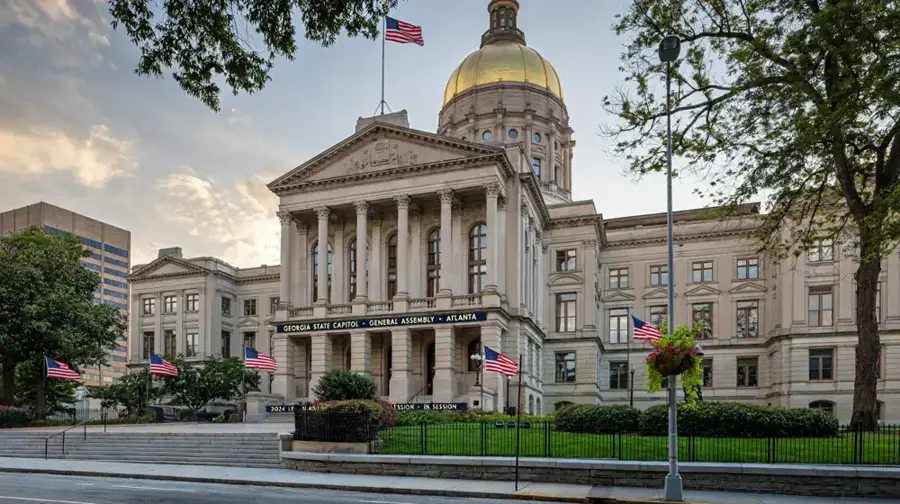
State: Georgia | Seat: U.S. Senate, Class II — Ossoff is seeking a second term | Party: Democratic | General Election: November 3, 2026 | Opponent: Mike Collins (R)
At a Glance
| Detail | Fact |
|---|---|
| Full name | Thomas Jonathan Ossoff |
| Born | February 16, 1987, Atlanta, Georgia |
| Age | 39 |
| Party | Democratic |
| Current office | U.S. Senator from Georgia (in office since January 20, 2021) |
| Education | B.S. in culture and politics, Georgetown University School of Foreign Service; M.Sc. in international political economy, London School of Economics |
| Career before politics | National security aide to Rep. Hank Johnson; CEO of Insight TWI, a London-based investigative documentary production company |
| Family | Married to Dr. Alisha Kramer, an OB-GYN and assistant professor at Emory University School of Medicine; two daughters, Eva (4) and Lila (1); lives in Atlanta |
| Political experience | U.S. Senate (2021–present); 2017 Democratic nominee in Georgia's 6th District special House election (lost narrowly to Karen Handel) |
| Defining feature | The youngest sitting U.S. senator — elected at 33, Georgia's first Jewish senator, and the Democrats' most closely watched incumbent of the 2026 cycle |
Early Life and Education
Jon Ossoff was born Thomas Jonathan Ossoff in Atlanta on February 16, 1987. He attended the private Paideia School in Atlanta. As a teenager he wrote to civil-rights icon and Georgia Congressman John Lewis — and later landed an internship in Lewis's office, an experience that introduced him to congressional politics. Lewis became a mentor.
He studied at Georgetown University's School of Foreign Service, then earned a Master of Science in international political economy from the London School of Economics.
Career Before Politics: Investigations and Film
Ossoff's pre-political career was unusual for a senator:
- Congressional national-security aide: He worked for Georgia Representative Hank Johnson on national security and foreign affairs.
- Investigative media executive: He became CEO of Insight TWI, a London-based investigative television production company, producing documentaries on corruption, organized crime, and human trafficking that were broadcast internationally.
The journalism background shaped his Senate style: oversight hearings run like investigations, with viral clips that have made him one of the most watched Democrats in the chamber.
Political Career
2017: the special election. Ossoff first gained national attention as the 30-year-old Democratic nominee in the special election for Georgia's 6th Congressional District. He narrowly lost to Republican Karen Handel — but the campaign, which drew record small-donor money, established him as a rising Democratic star.
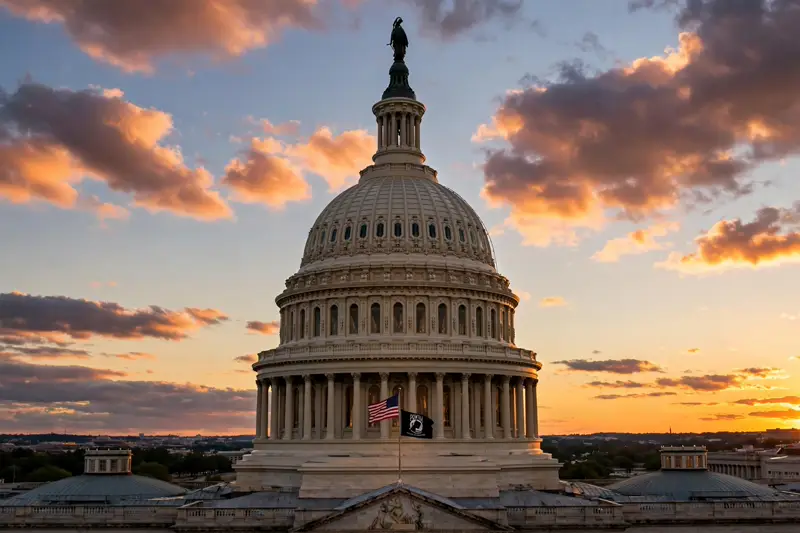
2021: the Senate. Ossoff ran for the Senate in 2020 and defeated Republican incumbent David Perdue in the January 5, 2021 runoff — one of the two Georgia runoffs (alongside Raphael Warnock's) that flipped the chamber to Democrats. Sworn in on January 20, 2021, at age 33, he became the youngest sitting senator, the first millennial elected to the Senate, the youngest person elected to the Senate since 1980, the youngest Democratic senator since Joe Biden in 1972, and Georgia's first Jewish senator.
The Senate record. According to his Senate office, Ossoff has sponsored more than a dozen bills that became law with bipartisan support, including:
- Laws supporting rural communities responding to opioid overdoses;
- Stronger requirements for social-media companies to report suspected child trafficking;
- Expanded oversight of federal prisons;
- Improved technology to detect fentanyl at the border;
- Elimination of unnecessary federal reports.
On health care, he voted for the 2022 Inflation Reduction Act — which capped out-of-pocket insulin costs at $35/month for Medicare enrollees, gave Medicare authority to negotiate some drug prices, and extended enhanced ACA premium subsidies — and later pushed to continue those subsidies. In April 2026 he offered an amendment to the fiscal year 2026 budget resolution to prevent insurers from denying medically necessary treatment; Senate Republicans blocked it.
The national spotlight. Ossoff's polished speeches and viral Senate moments have drawn comparisons to Barack Obama and fueled persistent 2028 presidential speculation — which he has repeatedly shut down. During his 2026 reelection debate he pledged to serve a full six-year term if reelected and said he had "zero interest" in a 2028 White House bid, calling the speculation a "curse." A viral 2026 moment — commenting in an Atlanta speech on Trump's close relationship with staffer Natalie Harp — launched widespread speculation about Harp's White House role and drew heavy conservative criticism.
The 2026 Race
Ossoff faces Republican Representative Mike Collins, a trucking-company owner and combative Trump ally who won a June 2026 runoff against former football coach Derek Dooley (55.5%) after a last-minute Trump endorsement. (Governor Brian Kemp had backed Dooley, making Collins's win a rebuke of the Kemp wing.)
Georgia is rated Likely Democratic by Cook — the Democrats' safest seat on this list — but Republicans see an opening: Ossoff is the only Democratic incumbent running in a state Trump won, and his national profile makes him a target for the full weight of the GOP machine. Collins's campaign is built on tying Ossoff to Democratic governance and running up rural margins; Ossoff's is built on his bipartisan legislative record and Georgia's changing electorate.
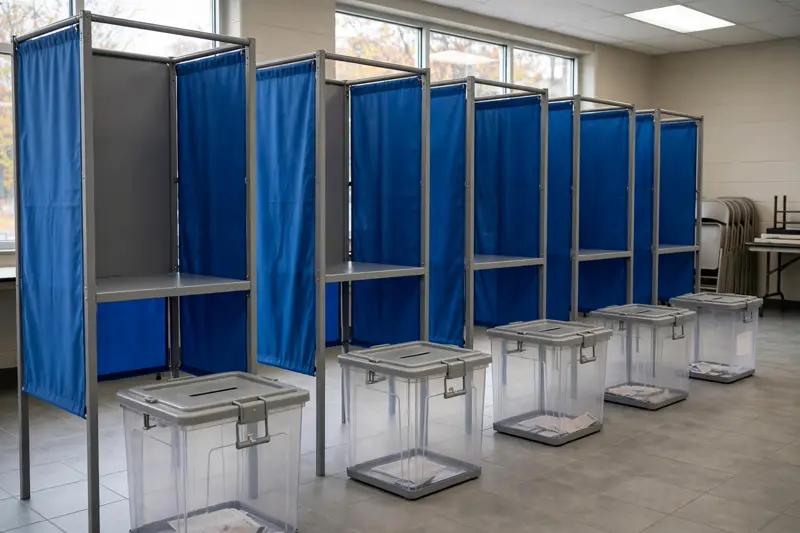
Early voting ran October 13–30. The race is expected to be among the most expensive Senate contests in the country.
Polls, Fundraising, and Prediction Markets
- Polling: The RealClearPolitics average in October 2026 showed Ossoff at 52.0% and Collins at 43.4% — Ossoff ahead by a comfortable margin.
- Prediction markets: Polymarket/Kalshi traders gave Ossoff roughly a 95% implied chance of winning as of late October 2026, per the project tracking index and rotowire's market roundup — the strongest Democratic position of any Senate race in the country.

- Fundraising: precise late-cycle totals were not confirmed for this profile; Ossoff is historically among the strongest fundraisers in the Senate, and Collins reported about $6.5 million raised through June 30 with roughly $2 million cash on hand (per thegafiles.com).
- Ratings: Cook Political Report: Likely D. Sabato's Crystal Ball: Likely D.
Key Campaign Issues
- Health care: protecting the ACA, extending premium subsidies, lowering drug costs, defending Medicare and Medicaid — the core of his legislative identity.
- Voting rights and civil rights: support for federal voting-rights protections; backing the Equality Act; opposition to the rollback of diversity programs.
- Public safety: fentanyl interdiction, child-trafficking reporting, prison oversight — bipartisan law-and-order credentials.
- Infrastructure and rural Georgia: opioid-response funding, rural broadband and health care.
- Ethics and anti-corruption: accountability and reform of government corruption is a stated platform plank.
- Housing affordability: a 2026 campaign emphasis.
- Marijuana: supports legalization — "It's past time to legalize, regulate, and tax cannabis."
- Opposition to the Trump tax-and-spending law: Ossoff has attacked its Medicaid reductions and the distribution of its tax benefits; Collins voted for it.
Campaign Strategy
Ossoff is running as Georgia's bipartisan workhorse: the senator who passes laws with Republicans, investigates corruption regardless of party, and delivers for rural and urban Georgia alike. His team wants the race to be a referendum on competence and results — a dozen bipartisan laws — rather than on national partisanship. The 2028-speculation shutdown is part of the same strategy: reassuring Georgia voters, especially the Black voters in Atlanta, Savannah, and Augusta who powered the 2021 runoffs, that he is "here to stay."
Collins's team wants the opposite: a nationalized race about Trump, immigration, and Democratic governance in a state Trump carried.
What to Watch in the Final Days
1. The margin: Ossoff is favored, but the size of his win matters — a narrow win keeps Georgia on the 2028 battleground list; a blowout ends the argument.
2. Black voter turnout: the engine of Democratic Georgia — whether 2026 midterm turnout in Atlanta, Savannah, and Augusta matches the runoff energy.
3. The suburbs: Gwinnett, Cobb, and Henry counties — the diversifying suburbs that flipped Georgia blue.
4. Collins's controversies: the ex-chief-of-staff scandal and the son-in-law's white-nationalist links — whether they break through with swing voters.
5. 2028 positioning: every Ossoff appearance is now read through the presidential lens, whatever he says.
Georgia in 2026: The State Context
Georgia is the Democrats' southern firewall — the state that made the 2021 Senate majority and that both parties now treat as a permanent battleground. Trump won it back in 2024, but the underlying demographics (a growing, diversifying metro Atlanta; energized Black voters; competitive suburbs) keep it in play. An Ossoff win would confirm Georgia's battleground status and protect the Democrats' most valuable incumbent; a Collins upset would be the shock of the cycle and would likely mean the night is very bad for Democrats everywhere.
Career Timeline
- 1987: Born February 16 in Atlanta; attends the Paideia School; as a teenager writes to Rep. John Lewis and interns in his office.
- 2000s: Studies at Georgetown's School of Foreign Service and earns an M.Sc. from the London School of Economics; works as a national-security aide to Rep. Hank Johnson.
- 2010s: Becomes CEO of Insight TWI, a London-based investigative documentary company covering corruption, organized crime, and human trafficking.
- 2017: Democratic nominee in the Georgia 6th District special House election; narrowly loses to Karen Handel but becomes a national figure.
- January 2021: Defeats Sen. David Perdue in the Senate runoff; sworn in January 20 at age 33 — the youngest sitting senator, the first millennial senator, and Georgia's first Jewish senator.
- 2021–2026: Sponsors 12+ bipartisan bills signed into law (opioid response, child-trafficking reporting, prison oversight, fentanyl detection); votes for the Inflation Reduction Act; pushes ACA subsidy extensions.
- 2026: Pledges in his reelection debate to serve a full six-year term with "zero interest" in a 2028 presidential run; a viral speech moment about Trump's aide Natalie Harp draws national attention and conservative backlash.
- October 13–30, 2026: Early voting in Georgia.
- November 3, 2026: General election against Mike Collins (R).
Sources
- thebiographybytes.com profile; *The Sun* (Oct. 2026) profile; *USA Today* (Aug. 21, 2026) "five things"; thecityceleb.com biography; georgiaindependent.com on the legislative record; thehiphopdemocrat.com on the 2028 pledge; thegafiles.com candidate pages; thecurrentga.org on the Collins runoff; fox5atlanta.com candidate profile; project tracking index (RCP averages, Polymarket odds, Oct 2026).
Coalitions and Key Supporters
Ossoff's coalition is the Georgia Democratic machine at full strength: Black voters in Atlanta, Savannah, and Augusta who powered the 2021 runoffs; the diversifying suburbs of Gwinnett, Cobb, and Henry counties; young voters drawn to his national profile; and a national small-donor base that made him one of the Senate's most prolific fundraisers. The organizing infrastructure built by Stacey Abrams's network and refined through two Senate cycles is the ground game beneath the polling lead.
His campaign's discipline on the 2028 question — the debate-stage pledge of a full six-year term and "zero interest" in a presidential run — is aimed squarely at holding this coalition together, reassuring the voters who did the work in 2021 that he won't use their Senate seat as a stepping stone. His vulnerability is the one shared by every incumbent in a midterm with an unpopular national environment for their party — except that in Georgia, unusually, the environment may not apply: his bipartisan legislative record gives him a localized identity strong enough to survive it.
The Bottom Line
Jon Ossoff's reelection was supposed to be the Democrats' hardest incumbent defense of 2026 — the only Democratic senator seeking reelection in a Trump-won state. Instead, it has become their safest: a nine-point polling lead, 95% prediction-market odds, and a Likely D rating from every major forecaster. The transformation is a testament to the campaign Ossoff has run — bipartisan, substantive, disciplined — and to the opponent Republicans nominated. But safe races still have to be won, and Georgia's recent history is full of surprises. Ossoff's team knows that the margin matters as much as the outcome: a blowout confirms Georgia's battleground status and ends the 2028 speculation he keeps disavowing; a narrow win keeps every question open. Either way, the youngest senator's second act is about to begin.
*Profile prepared October 24, 2026. Poll numbers and market odds change frequently; verify against current averages before publishing.*


Comments
Post a Comment